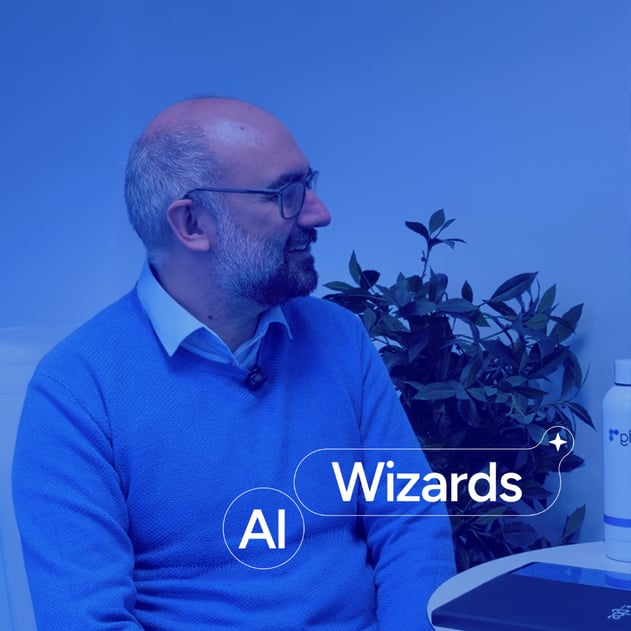
In the first episode of AI Wizards by Orbitae - AI SDG by Group, Roberto Font, Head of Artificial Intelligence Architecture at SDG, shares practical insights on one of the biggest challenges organizations face today: moving from AI experimentation to real enterprise adoption.
While generative AI and AI agents dominate the conversation, many companies remain stuck in the proof-of-concept phase. According to Roberto, the real challenge is not building something that works at 90% — it’s achieving the final 10% required for production: scalability, governance, robustness, and seamless integration with enterprise systems.
Cutting Through the AI Hype
With the rapid evolution of artificial intelligence, distinguishing real business value from market noise is critical. At SDG, the approach is clear: test early, test deeply, and validate impact before scaling. Through innovation frameworks, AI observatories, and structured experimentation, the focus is on identifying technologies that deliver measurable business outcomes.
Engineering the “Magic” of AI Agents
AI may feel like magic to end users — but behind the scenes, it is engineering. Roberto explains how enterprise AI agents require:
- Strong architectural foundations
- Secure integration with corporate data sources
- Clearly defined operational boundaries
- Governance and human-in-the-loop mechanisms
The rise of agentic AI marks a shift from simple chatbots to autonomous systems capable of executing tasks, collaborating with other agents, and driving automation at scale.
From Reactive to Real-Time Decision-Making
One of the most transformative impacts of AI is in business intelligence and decision-making. By connecting AI directly to enterprise data through semantic layers, organizations can move from static reports to real-time, data-driven insights.
SDG’s Insight Gen platform enables business users — not just technical teams — to interact with corporate data in natural language, accelerating decisions and improving agility.
AI Governance and Enterprise Readiness
As AI agents gain autonomy, governance becomes essential. Defining roles, access permissions, operational scope, and human oversight ensures that AI systems operate securely and responsibly within enterprise environments.
What’s Next in 2026?
Looking ahead, SDG is expanding its AI ecosystem with new components such as:
- Productivity and conversational AI platforms
- Advanced business insight tools
- Document automation solutions
- Client and competitive intelligence systems
- AI-powered internal co-pilots for enterprise architecture
A key trend highlighted for 2026 is the emergence of the semantic data layer — enabling AI systems to transform raw data into actionable business knowledge.
Watch the full interview to discover how to scale AI from pilot to production, deploy enterprise AI agents responsibly, and turn generative AI into measurable business value.
-1.png)
.jpg)









.jpg)